Tomaso Binga, born Bianca Pucciarelli in Menna, artist and performer, is one of the protagonists of visual and sound poetry in Italy. Born in Salerno in 1931, she moved to Rome in the late 1950s where she became a teacher of art education and later taught Theory and Technique of Mass Media at the Academy of Fine Arts in Frosinone.
In the 1960s, she produced cubist-geometric drawings and small terracotta sculptures, but her artistic interest soon turned to words, writing and signs in their poetic aesthetic value. From the 1970s onwards, her research inserted itself into the background of Visual Poetry, Verbo-Visual Writing and New Writing.
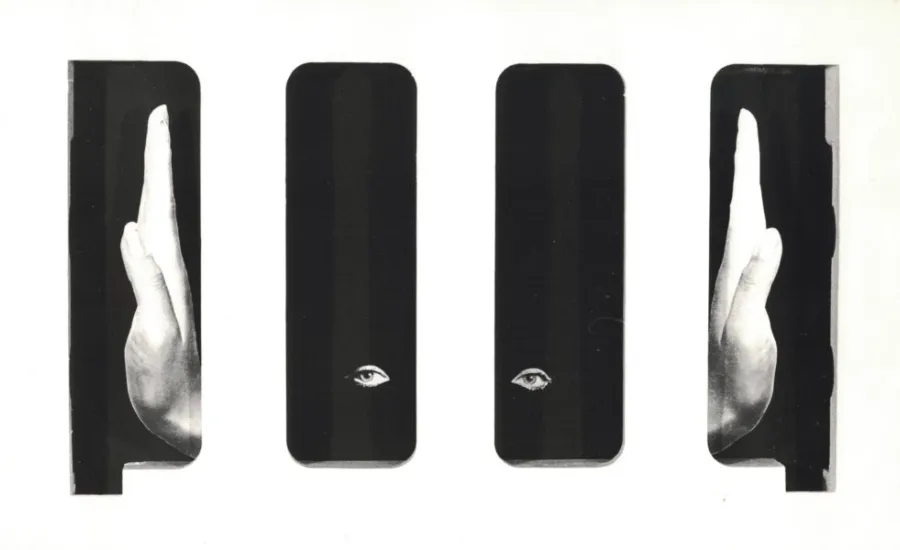
Her official entry into the art world took place in 1971 with her first solo exhibition L'oggetto reattivo [The reactive object] at Studio Oggetto in Caserta. It was on this occasion that she took on the male pseudonym of Tomaso Binga (an alter-ego with which she would also celebrate a fictitious marriage in 1977, the work-action Bianca Menna e Tomaso Binga Oggi spose [Bianca Menna and Tomaso Binga today brides]), in order to expose the male chauvinist privilege that also reigned in the field of art. Although she did not actively participate in feminist militancy, Binga embraced its demands from the very first works made on polystyrene supports with photographic inserts and collages.
During this period, she produced her Ritratti Analogici [Analogical portraits], compositions of letters traced with felt-tip pen and collages of anatomical details or other elements that allude to the physicality or personality of the subject portrayed, in an interplay between image and writing that removes language from the logic of everyday use. Irony is also an important component in the performances - which the artist calls "performance poems" - in which gesture, writing and sound combine to denounce the mechanisms and stereotypes of the world of mass media, of the dominant culture, of the language of power (Vista Zero, 1972 and Parole in blu, 1973).
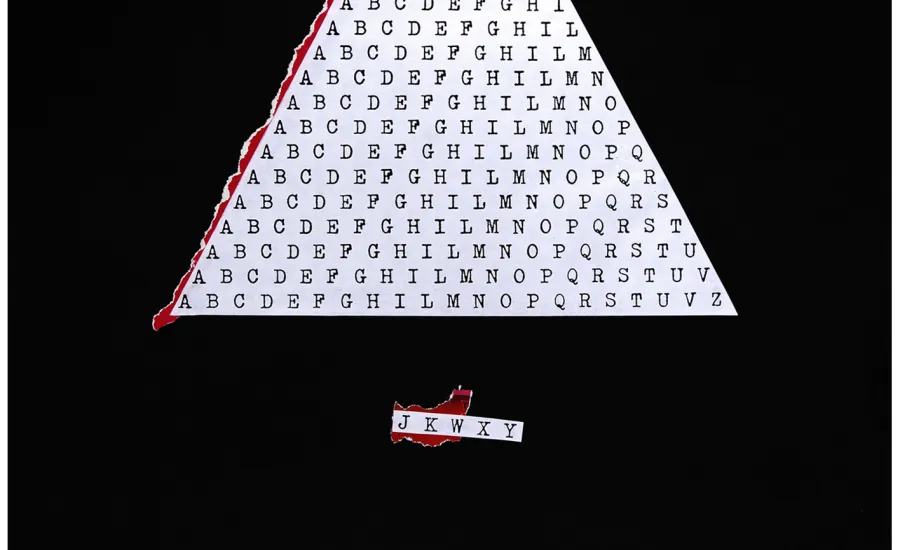
The reflection on writing continued with the elaboration of Scrittura Asemantica or Desemantizzata [Asemantic Writing or Desemantised] on the occasion of two exhibitions, at the Galleria L'Obelisco in Rome in 1974 and at the Galleria Cenobio Visualità in Milan in 1975, with works such as Abbassalingua [Tongue depressor] or Lettere al mittente [Letters to Sender], which represent an attempt to desemantize and resemantize the verbal code by acting on both objects and words: it is a "subliminal", "silent" writing that acts regardless of the sound and meaning of the words.
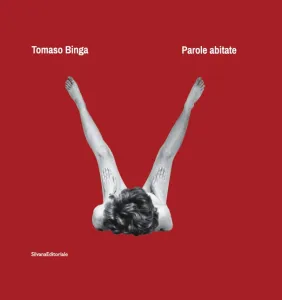
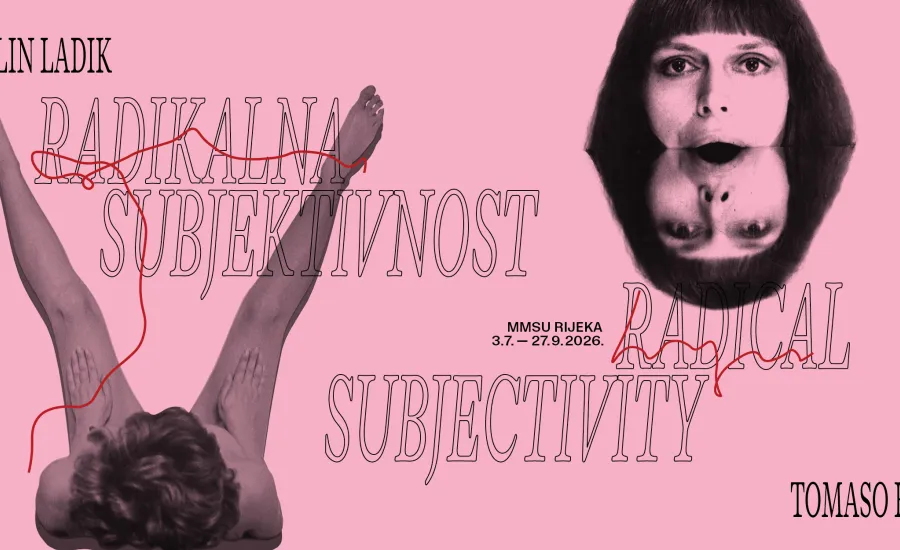
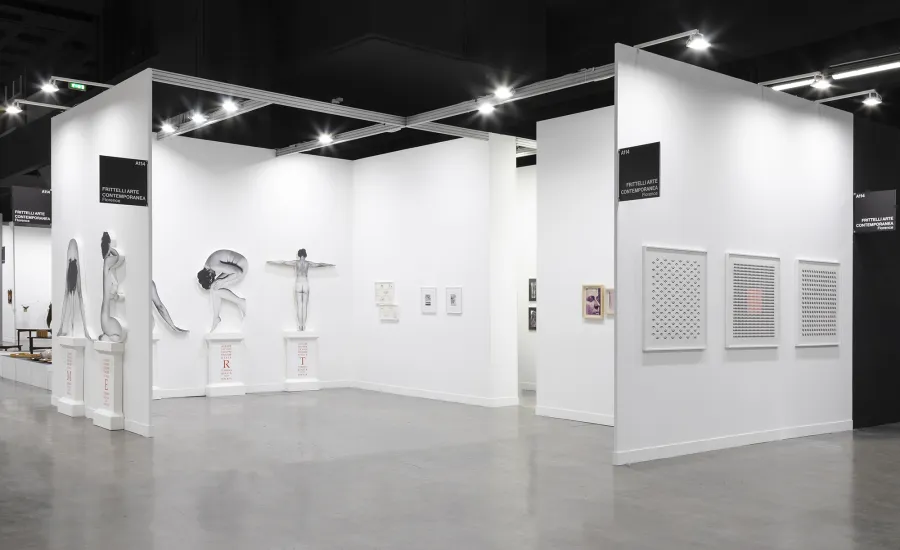
With the series Scrittura vivente [Living writing] (1976), it is the artist's own body that is transformed into writing. The work Alfabetiere murale [Wall alphabetiser], exhibited at the Luca Palazzoli Gallery in Milan the following year, is composed of a revisitation of the alphabet books used at the time in primary schools, where the alphabet sign is replaced by a photograph of the naked body of the artist portrayed while miming the shape of the letter. The aim is to create a radical alternative to male language, starting from the subject that it has been excluded: the woman, in her physical, social and political corporeity.
In the same year, she realised the performance-installation Casa Malangone [Malangone's House], in which she camouflaged herself, motionless, between the walls of a private house covered with white wallpaper covered with her "desemantized writing". 1976 was also an important year on the exhibition front: the artist formed an association with the photographer Verita Monselles, with whom she organised a series of exhibitions and performances, and participated in the exhibition Tra linguaggio e immagine [Between language and image] curated by Mirella Bentivoglio at the Galleria Il Canale in Venice.
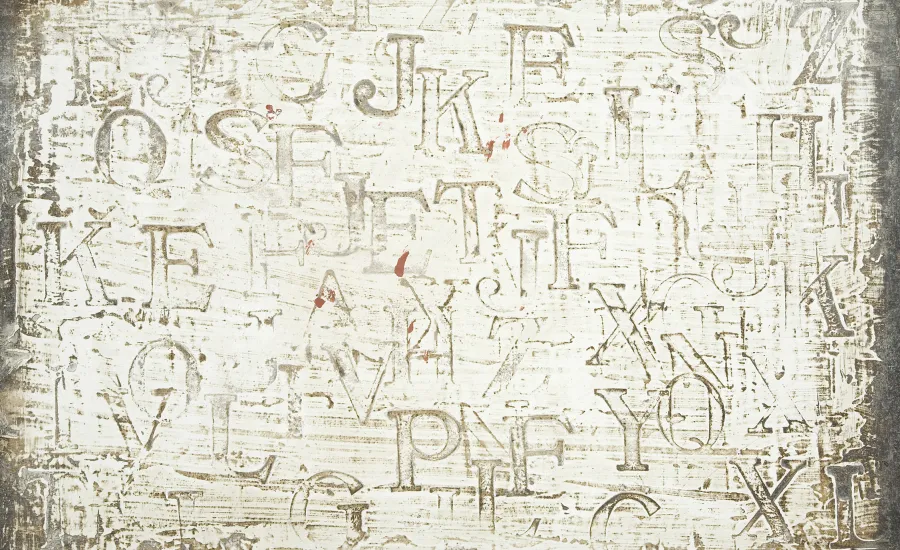
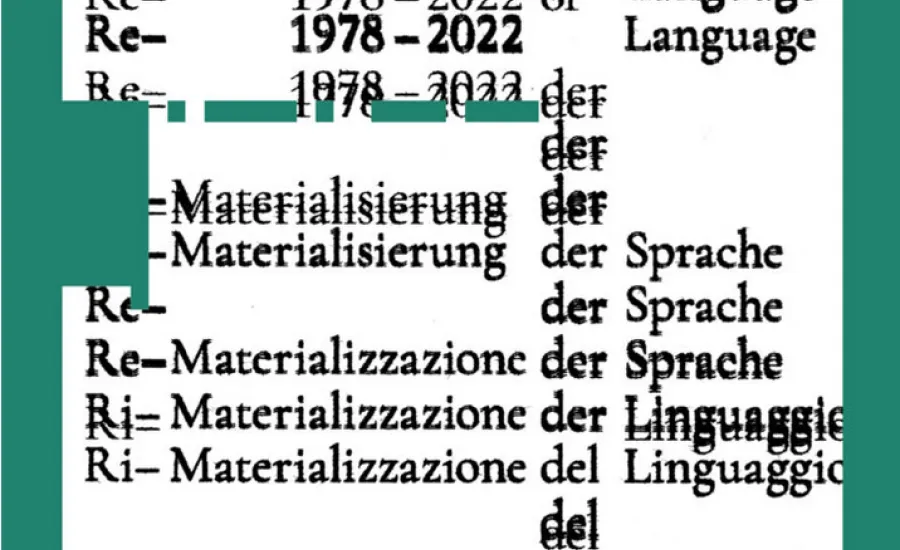
On the occasion of her participation in the exhibition Materializzazione del linguaggio [Materialization of the language] at the Venice Biennale in 1978, she presented the series Dattilocodice [Dactylcode], where the superimposition of typefaces leads not only to a loss of immediate recognisability of the sign, but also to a "condensation" that allows it to acquire a kind of iconicity.
In the years that followed, Tomaso Binga's works found space and recognition in important national and international exhibitions, from From Page to Space at Columbia University in New York to Linee della ricerca artistica in Italia 1960/1980 [Lines of Artistic Research in Italy 1960-1980] at the Palazzo delle Esposizioni in Rome, from the 16th S. Paulo do Brazil Biennial to the exhibition Attraversamento su Klimt [Crossing over Klimt] at the Italian Cultural Institute in Vienna.
Since 1982, she has been part of writing and performance poetry groups, participating in numerous events at an international level; worth mentioning are performances such as Il Confessore elettronico [The Electronic Confessor] in 1989 or La Dieta [The Diet] in 1994 (both photographed by Verita Monselles) and the Mail-art operation Riflessioni a puntate [Reflections by episodes], consisting of a typewritten composition dedicated to reflections on current affairs sent month by month during 1991 to 280 people all over the world.
In the 2000s, with Dittici interscambiabili [Interchangeable diptychs] and Poesia a doppio finale [Poem with a double ending], the artist created works that lend themselves to a variability of arrangement and require the viewer's intervention in the compositional choice. Her collaborations in recent years include one with Maria Grazia Chiuri, Art Director of the Maison Dior, which culminated in Paris with the set design for the Autumn-Winter 2019 pret-a-porter fashion show, created by reinterpreting Tomaso Binga's 1976 work Scrittura vivente [Living writing].
Tomaso Binga has directed the Roman cultural association Lavatoio Contumaciale since 1974 and is Honorary President of the Filiberto e Bianca Menna Foundation in Salerno.
Her works are held in the collections of important museums and foundations in Italy and abroad, including La Galleria Nazionale d'Arte Moderna e Contemporanea, Rome; MART - Museo di arte moderna e contemporanea di Trento e Rovereto; Fondazione Museion, Bolzano; Sammlung Verbund, Vienna; Collezione Farnesina, Rome.