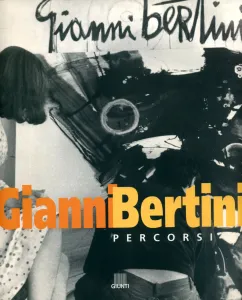
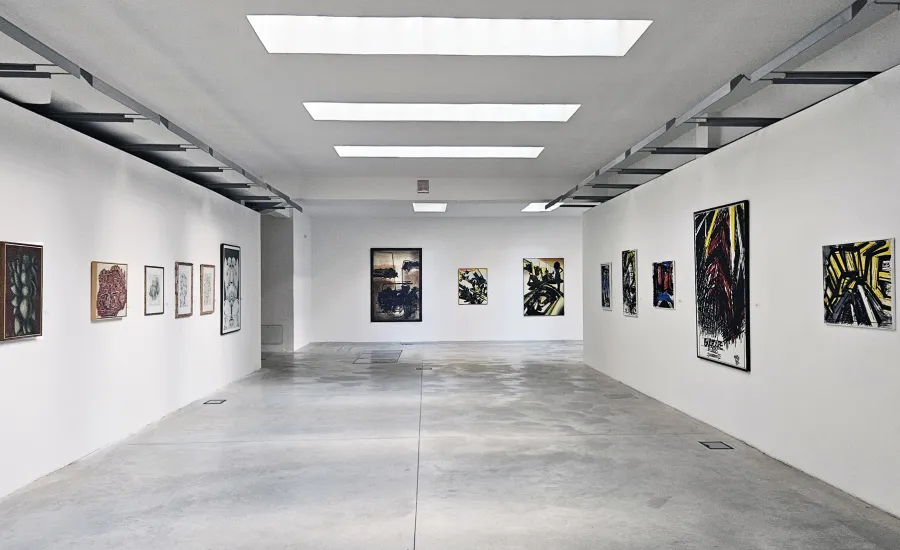
An original and eclectic artist, informal abstract painter, an inventor of provocative solutions, as well as writer, performer and events promoter, Gianni Bertini was one of the protagonists of the art scene in the second half of the 20th century.
Gianni Bertini was born in Pisa in 1922. After graduating in mathematics, he made his artistic debut in several shows in the immediate post-war period, soon emerging at the forefront of the Italian art scene.
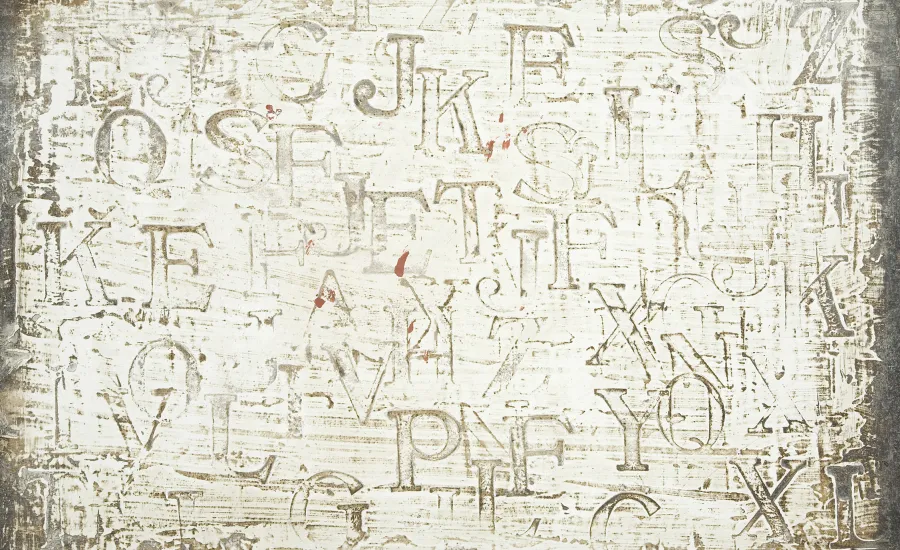
In 1949, the international exhibition Arte d'Oggi was inaugurated at the La Strozzina gallery in Florence. In this important exhibition, attended by Afro, Cagli, Fontana, Morlotti, Munari, Soldati and Veronesi amongst others, alongside Deyrolle, Messagier, Mortensen, Poliakoff and Vasarely, Bertini exhibited the works from his first cycle, I Gridi [The Screams], using stamped letters and figures. In October 1949, he had a solo show at the Salto bookshop-gallery in Milan, as part of the initiatives promoted by the MAC (Movimento Arte Concreta), a movement that he was briefly associated with, before acquiring a lively interest in Informalism, expressed through works aligned with Art Nucleare in the second half of 1951.
At the start of the following year, Bertini moved to Paris, finding his place in the capital intellectual and artistic milieux. His independent, experimental attitude received immediate recognition from Edouard Jaguer and Pierre Restany, who would follow him closely.
Restany considered Bertini one of the protagonists of lyrical abstraction, writing his first monograph on him in 1962. While pursuing an informal approach, Bertini was also a tireless experimenter, painting suggestive atmospheres and searching for mythological references that he would later find in mechanomorphic-type works. He later turned to performative actions veined with an irony that came to the fore in the “bertinization” processes presented in Paris, Brussels, and Venice in the early Sixties.
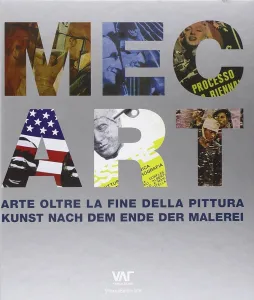
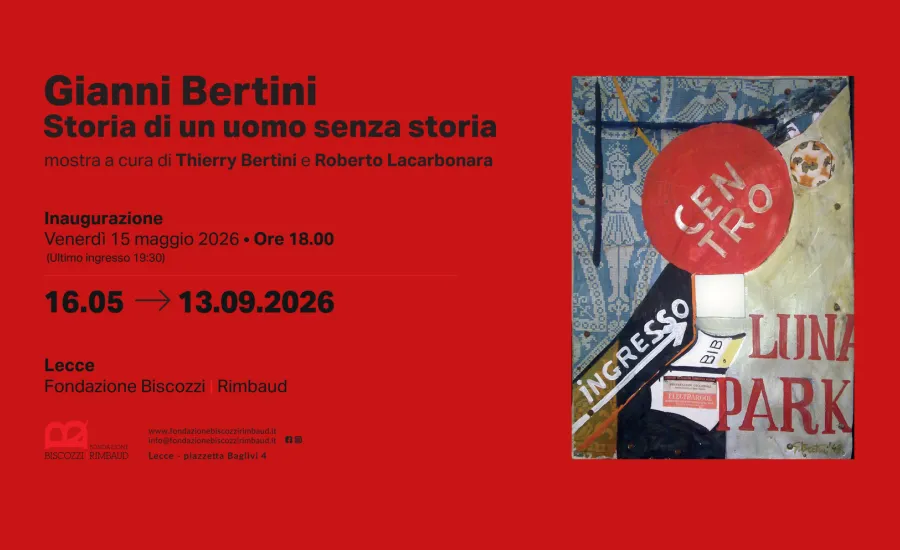
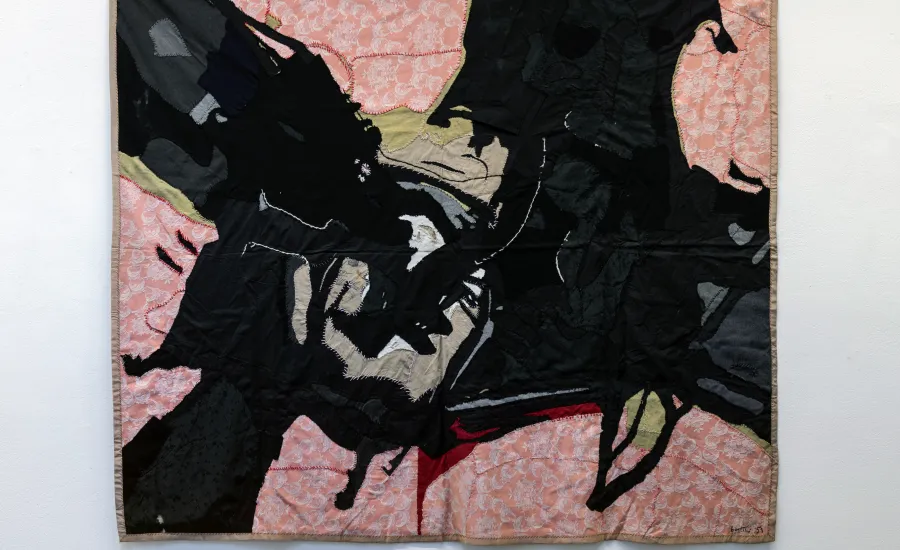
It was during this period that he became increasingly fascinated by print images, which would soon dominate his production: first, his series of Mitologie [Mythologies], collages using scraps of newspaper and paint, than the works created by means of Mec art, a technique fine-tuned by Bertini that involved transferring photographic images onto canvases treated with photographic emulsion then modifying them through painting. Formula 1 cars and athletes captured during a performance; sexy, fashionable girls; along with the winds of war in various historic moments; images form ads and new phots: all these images became a way to seize reality by reinterpreting the “myths of our time”. The Mec aesthetic soon proved to be extremely topical, representing the real possibility of creating a European alternative to Pop Art.
These works attained great visibility during numerous international events between 1966 and 1968, the year in which Bertini had his own room at the Venice Biennale, where he presented a selection of his impactful Mec works.
His creative energy flowed unabated in the following years. Bertini continued to pursue new ways of processing images, promote performative art, and undertake editorial initiatives and explorations of the relationship between word and image influenced by some aspects of visual poetry, also promoting journals like "Lotta Poetica" together with Sarenco.
In the following decades, his painting continued to be influenced by Mec art, acquiring new subjects and techniques along the way that would lead to cycles like Abbaco (1976-1982) Guerra del Golfo [The Gulf War] (1991) and Antonin Artaud (1991). He also explored reworking of digital prints, choosing wood as a support for his later works.
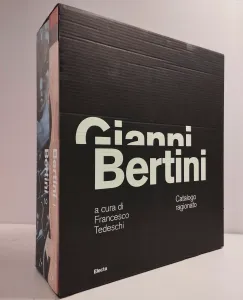
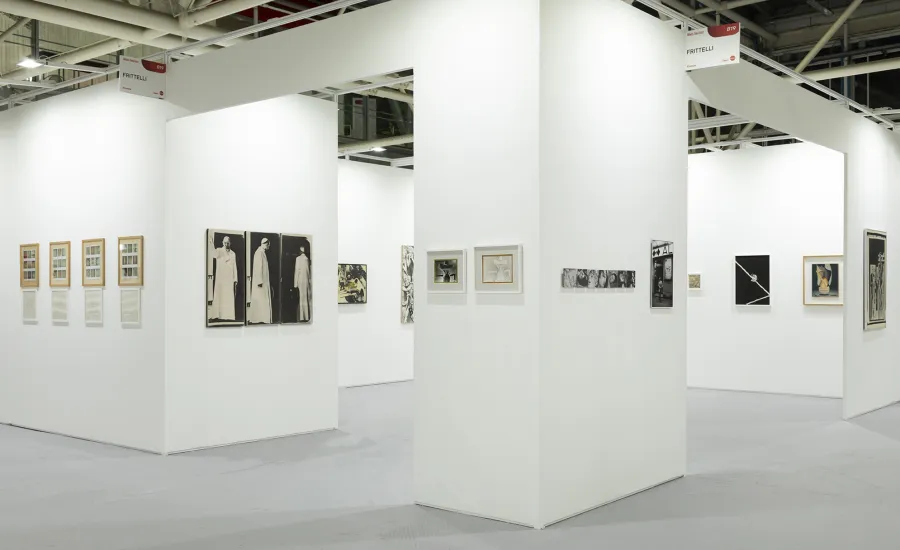
His artistic and spiritual activity has found continuity in the Archives named after him, founded, the first in 2005 in Florence by Frittelli arte contemporanea and the second in 2011 in Milan by his son Thierry, who in 2020, together with Francesco Tedeschi, produced the Catalogo Ragionato di Gianni Bertini.